Buy immersiveeducation.eu ?
We are moving the project
immersiveeducation.eu .
Are you interested in purchasing the domain
immersiveeducation.eu ?
domain@kv-gmbh.de · 0541-91531010
Buy immersiveeducation.eu ?
How are Latin subjunctive subordinate clauses still translated with the subjunctive?
Latin subjunctive subordinate clauses are still translated with the subjunctive in English to convey the same sense of uncertainty, possibility, or doubt. In English, the subjunctive mood is used to express hypothetical or unreal situations, wishes, recommendations, or demands. Therefore, when translating Latin subjunctive subordinate clauses, the English subjunctive is used to maintain the same mood and meaning of the original Latin sentence. **
Maybe subjunctive or indicative?
The choice between subjunctive or indicative depends on the context of the sentence. The subjunctive mood is used to express doubt, uncertainty, desire, or hypothetical situations, while the indicative mood is used for statements of fact or certainty. To determine whether to use subjunctive or indicative, consider the verb's relationship to reality and whether it is expressing a fact or a possibility. **


Similar search terms for Subjunctive
Top-Angebote
Products related to Subjunctive:
-
Inspired Deals Smart Squirrel Interactive Learning Toy For Kids Smart Squirrel Interactive Learning Toy For KidsMake playtime feel brighter, smarter, and more connected with this interactive toy for kids. Designed for toddlers and young learners, it turns tapping games, sounds, colors, and challenges into joyful learning moments. This educational toy for...104,97 $*Shipping: 0,00 $Secure redirect to the provider
-
The Cart Load Educational Learning Toys For Kids, Toddlers, Fun Interactive Learning, Alphabet, Numbers, Colors, And Animals Educational Learning Toys For Kids, Toddlers, Fun Interactive Learning, Alphabet, Numbers, Colors, And AnimalsUnlock the world of learning with this Educational Learning Toy for Kids! Designed for toddlers aged 3 to 8, this interactive learning pad combines sight, touch, and hearing to stimulate curiosity and develop essential skills. Perfect for enhancing...41,97 $*Shipping: 0,00 $Secure redirect to the provider
-
PRiME 2024 NEW Educational Learning Toys For Kids Toddlers Interactive Touch & Sound Learning Tablet For Boys & Girls 2024 NEW Educational Learning Toys For Kids Toddlers Interactive Touch & Sound Learning Tablet For Boys & Girlsooking for a fun and educational toy for toddlers and kids age 2 to 7 This 2024 NEW educational learning toy combines interactive touch, sound, and colorful visuals to create an engaging, screenfree learning experience that develops core skills and...29,97 $*Shipping: 0,00 $Secure redirect to the provider
-
Learning Resources Sing-Along Numberblock Five Plush Interactive Toy, Counting Toy - Age 3+ Learning ResourcesGive a big hand for Sing-Along Numberblock Five, the interactive cuddly toy who’s a real star! This cuddly toy helps little ones build counting and colour recognition skills through imaginative play and interactive learning with the friendly Numberblock Five. Numberblock Five has her famous High Five Hand – just like in the episodes! See each finger light up and count along from 1–5. Numberblock Five is the lead singer in the band. Listen as she shares 12 phrases and songs including the Numberblocks theme tune. Numberblock Five measures approx. 28cm W x 27cm H. Requires 3 AAA batteries (included). Numberblocks Playful Pals One & Two and Three & Four are also available26,99 £*Shipping: 2,99 £Secure redirect to the provider



-
Conditional, subjunctive or indicative?
The choice between conditional, subjunctive, or indicative mood depends on the context of the sentence. The conditional mood is used to express a hypothetical situation or a condition that is dependent on something else happening. The subjunctive mood is used to express wishes, recommendations, or possibilities. The indicative mood is used to state facts or ask questions. **
-
Perhaps, subjunctive or indicative?
The choice between subjunctive or indicative depends on the context of the sentence. The subjunctive mood is used to express hypothetical or uncertain situations, wishes, recommendations, or doubts. On the other hand, the indicative mood is used for statements of fact or certainty. Therefore, if the sentence is expressing a possibility, doubt, or desire, the subjunctive mood would be more appropriate. **
-
What is the use of the present subjunctive and the past subjunctive?
The present subjunctive is used to express desires, doubts, wishes, or hypothetical situations in the present or future. It is often used after certain verbs and conjunctions that indicate uncertainty or subjectivity. The past subjunctive, on the other hand, is used to express desires, doubts, wishes, or hypothetical situations in the past. It is often used in the same way as the present subjunctive, but in reference to past events or situations. Both subjunctive forms are used to convey uncertainty or subjectivity in a sentence. **
-
Are the subjunctive I and the subjunctive II present in all tenses?
No, the subjunctive I and subjunctive II are not present in all tenses. The subjunctive I is only present in the present tense, while the subjunctive II is present in the past tense. The subjunctive I is used to express wishes, suggestions, or hypothetical situations in the present, while the subjunctive II is used to express wishes, suggestions, or hypothetical situations in the past. Each tense has its own specific form of the subjunctive mood. **


'It is strange that + subjunctive'
It is strange that she should be so calm in such a chaotic situation. **
What is a subjunctive politician?
A subjunctive politician is someone who uses conditional language or expresses uncertainty when discussing policies or decisions. They may use phrases like "if I were in charge" or "I would consider" instead of making definitive statements. Subjunctive politicians often leave room for negotiation or compromise, and they may be more open to alternative viewpoints or solutions. This approach can be seen as diplomatic or cautious, depending on the context. **
Top-Angebote
Products related to Subjunctive:
-
Multicon Wholesale Hub Educational Learning Toys For Kids Fun, Interactive Learning Play For Toddlers Educational Learning Toys For Kids Fun, Interactive Learning Play For ToddlersSpark your child's curiosity and enhance their learning journey with these educational learning toys designed for toddlers ages 27. Carefully crafted to promote cognitive and motor skills, this interactive toy set offers a variety of activities that...59,97 $*Shipping: 0,00 $Secure redirect to the provider
-
The Cart Load NEW Educational Learning Toys For Kids, Toddlers, Interactive Learning Pad, Best Early Learning Tool For Children NEW Educational Learning Toys For Kids, Toddlers, Interactive Learning Pad, Best Early Learning Tool For ChildrenStimulate Learning Through Synergy with the NEW Educational Learning Toys for Kid Give your child a head start in their learning journey with the NEW Educational Learning Toys for Kids, designed to captivate and engage toddlers aged 2 to 7. This...39,97 $*Shipping: 0,00 $Secure redirect to the provider
-
Inspired Deals Smart Squirrel Interactive Learning Toy For Kids Smart Squirrel Interactive Learning Toy For KidsMake playtime feel brighter, smarter, and more connected with this interactive toy for kids. Designed for toddlers and young learners, it turns tapping games, sounds, colors, and challenges into joyful learning moments. This educational toy for...104,97 $*Shipping: 0,00 $Secure redirect to the provider
-
The Cart Load Educational Learning Toys For Kids, Toddlers, Fun Interactive Learning, Alphabet, Numbers, Colors, And Animals Educational Learning Toys For Kids, Toddlers, Fun Interactive Learning, Alphabet, Numbers, Colors, And AnimalsUnlock the world of learning with this Educational Learning Toy for Kids! Designed for toddlers aged 3 to 8, this interactive learning pad combines sight, touch, and hearing to stimulate curiosity and develop essential skills. Perfect for enhancing...41,97 $*Shipping: 0,00 $Secure redirect to the provider
-
How are Latin subjunctive subordinate clauses still translated with the subjunctive?
Latin subjunctive subordinate clauses are still translated with the subjunctive in English to convey the same sense of uncertainty, possibility, or doubt. In English, the subjunctive mood is used to express hypothetical or unreal situations, wishes, recommendations, or demands. Therefore, when translating Latin subjunctive subordinate clauses, the English subjunctive is used to maintain the same mood and meaning of the original Latin sentence. **
-
Maybe subjunctive or indicative?
The choice between subjunctive or indicative depends on the context of the sentence. The subjunctive mood is used to express doubt, uncertainty, desire, or hypothetical situations, while the indicative mood is used for statements of fact or certainty. To determine whether to use subjunctive or indicative, consider the verb's relationship to reality and whether it is expressing a fact or a possibility. **
-
Conditional, subjunctive or indicative?
The choice between conditional, subjunctive, or indicative mood depends on the context of the sentence. The conditional mood is used to express a hypothetical situation or a condition that is dependent on something else happening. The subjunctive mood is used to express wishes, recommendations, or possibilities. The indicative mood is used to state facts or ask questions. **
-
Perhaps, subjunctive or indicative?
The choice between subjunctive or indicative depends on the context of the sentence. The subjunctive mood is used to express hypothetical or uncertain situations, wishes, recommendations, or doubts. On the other hand, the indicative mood is used for statements of fact or certainty. Therefore, if the sentence is expressing a possibility, doubt, or desire, the subjunctive mood would be more appropriate. **
Similar search terms for Subjunctive
-
PRiME 2024 NEW Educational Learning Toys For Kids Toddlers Interactive Touch & Sound Learning Tablet For Boys & Girls 2024 NEW Educational Learning Toys For Kids Toddlers Interactive Touch & Sound Learning Tablet For Boys & Girlsooking for a fun and educational toy for toddlers and kids age 2 to 7 This 2024 NEW educational learning toy combines interactive touch, sound, and colorful visuals to create an engaging, screenfree learning experience that develops core skills and...29,97 $*Shipping: 0,00 $Secure redirect to the provider
-
Learning Resources Sing-Along Numberblock Five Plush Interactive Toy, Counting Toy - Age 3+ Learning ResourcesGive a big hand for Sing-Along Numberblock Five, the interactive cuddly toy who’s a real star! This cuddly toy helps little ones build counting and colour recognition skills through imaginative play and interactive learning with the friendly Numberblock Five. Numberblock Five has her famous High Five Hand – just like in the episodes! See each finger light up and count along from 1–5. Numberblock Five is the lead singer in the band. Listen as she shares 12 phrases and songs including the Numberblocks theme tune. Numberblock Five measures approx. 28cm W x 27cm H. Requires 3 AAA batteries (included). Numberblocks Playful Pals One & Two and Three & Four are also available26,99 £*Shipping: 2,99 £Secure redirect to the provider
-
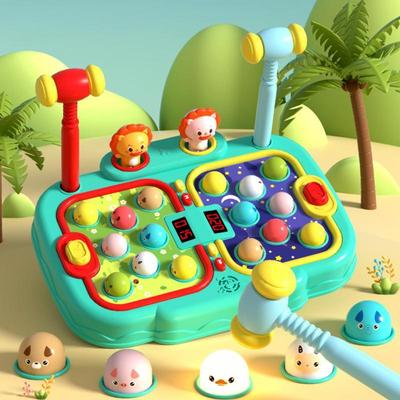
Uplift Picks Montessori Pop Up Animal Toy Interactive Learning Box For Toddlers Montessori Pop Up Animal Toy Interactive Learning Box For ToddlersWatching your child learn through play is one of the most rewarding moments. This Montessori pop up animal toy is designed to spark curiosity while supporting early development. With colorful buttons and surprise animal popups, it keeps little hands...42,48 $*Shipping: 0,00 $Secure redirect to the provider
-
Uplift Essentials Serene Motion Virtual Aquarium Lamp Serene Motion Virtual Aquarium Lamp"Bring the soothing magic of the underwater world to your tabletop with the Serene Motion Virtual Aquarium Lamp. This highdefinition desktop aquarium decorative light uses advanced ""movingpicture"" technology to create a mesmerizing, continuous swim..."82,97 $*Shipping: 0,00 $Secure redirect to the provider
-
What is the use of the present subjunctive and the past subjunctive?
The present subjunctive is used to express desires, doubts, wishes, or hypothetical situations in the present or future. It is often used after certain verbs and conjunctions that indicate uncertainty or subjectivity. The past subjunctive, on the other hand, is used to express desires, doubts, wishes, or hypothetical situations in the past. It is often used in the same way as the present subjunctive, but in reference to past events or situations. Both subjunctive forms are used to convey uncertainty or subjectivity in a sentence. **
-
Are the subjunctive I and the subjunctive II present in all tenses?
No, the subjunctive I and subjunctive II are not present in all tenses. The subjunctive I is only present in the present tense, while the subjunctive II is present in the past tense. The subjunctive I is used to express wishes, suggestions, or hypothetical situations in the present, while the subjunctive II is used to express wishes, suggestions, or hypothetical situations in the past. Each tense has its own specific form of the subjunctive mood. **
-
'It is strange that + subjunctive'
It is strange that she should be so calm in such a chaotic situation. **
-
What is a subjunctive politician?
A subjunctive politician is someone who uses conditional language or expresses uncertainty when discussing policies or decisions. They may use phrases like "if I were in charge" or "I would consider" instead of making definitive statements. Subjunctive politicians often leave room for negotiation or compromise, and they may be more open to alternative viewpoints or solutions. This approach can be seen as diplomatic or cautious, depending on the context. **
* All prices are inclusive of VAT and, if applicable, plus shipping costs. The offer information is based on the details provided by the respective shop and is updated through automated processes. Real-time updates do not occur, so deviations can occur in individual cases. ** Note: Parts of this content were created by AI.