Buy immersiveeducation.eu ?
We are moving the project
immersiveeducation.eu .
Are you interested in purchasing the domain
immersiveeducation.eu ?
domain@kv-gmbh.de · 0541-91531010
Buy immersiveeducation.eu ?
What is equivalence?
Equivalence refers to the state of being equal or interchangeable in value, function, or meaning. In mathematics, equivalence is used to denote that two expressions or equations have the same value or meaning. In other contexts, equivalence can refer to the similarity or comparability of two things. Overall, equivalence implies a relationship of equality or similarity between two or more entities. **
Does this equivalence hold?
Without knowing the specific equivalence being referred to, it is difficult to provide a definitive answer. Equivalences in mathematics and logic are typically proven through rigorous reasoning and logical deduction. It is important to carefully examine the definitions and properties of the elements involved in the equivalence to determine if it holds true. Without further information, it is not possible to determine if the equivalence holds. **


Similar search terms for Equivalence
Top-Angebote
Products related to Equivalence:
-
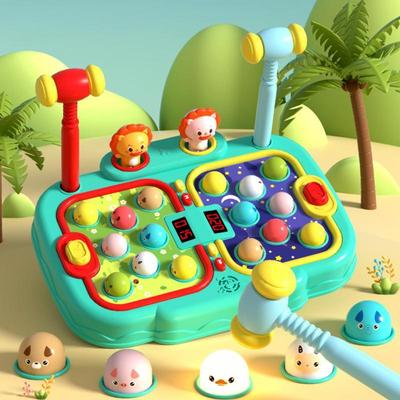
Inspired Deals Smart Squirrel Interactive Learning Toy For Kids Smart Squirrel Interactive Learning Toy For KidsMake playtime feel brighter, smarter, and more connected with this interactive toy for kids. Designed for toddlers and young learners, it turns tapping games, sounds, colors, and challenges into joyful learning moments. This educational toy for...104,97 $*Shipping: 0,00 $Secure redirect to the provider
-
The Cart Load Educational Learning Toys For Kids, Toddlers, Fun Interactive Learning, Alphabet, Numbers, Colors, And Animals Educational Learning Toys For Kids, Toddlers, Fun Interactive Learning, Alphabet, Numbers, Colors, And AnimalsUnlock the world of learning with this Educational Learning Toy for Kids! Designed for toddlers aged 3 to 8, this interactive learning pad combines sight, touch, and hearing to stimulate curiosity and develop essential skills. Perfect for enhancing...41,97 $*Shipping: 0,00 $Secure redirect to the provider
-
PRiME 2024 NEW Educational Learning Toys For Kids Toddlers Interactive Touch & Sound Learning Tablet For Boys & Girls 2024 NEW Educational Learning Toys For Kids Toddlers Interactive Touch & Sound Learning Tablet For Boys & Girlsooking for a fun and educational toy for toddlers and kids age 2 to 7 This 2024 NEW educational learning toy combines interactive touch, sound, and colorful visuals to create an engaging, screenfree learning experience that develops core skills and...29,97 $*Shipping: 0,00 $Secure redirect to the provider
-
HARPERCOLLINS Creative Confidence by Tom & David Kelley – Unleashing Your Creative Potential & Innovation MindsetA powerful and inspiring book from the founders of IDEO, the award-winning design firm, on unleashing the creativity that lies within each and every one of us. Too often, companies and individuals assume that creativity and innovation are the domain of the ‘creative types’. But two of the foremost experts in innovation, design and creativity on the planet show us that each and every one of us is creative. In an entertaining and inspiring narrative that draws on countless stories from their work at IDEO, and with many of the world's top companies and design firms, David and Tom Kelley identify the principles and strategies that will allow us to tap into our creative potential in our work lives, and in our personal lives, allow us to think outside the box in terms of how we approach and solve problems. ‘Creative Confidence’ is a book that will help each of us be more productive and successful in our lives and in our careers.4,95 £*Shipping: 1,99 £Secure redirect to the provider



-
What are equivalence relations?
Equivalence relations are a type of relation between elements of a set that satisfy three properties: reflexivity, symmetry, and transitivity. Reflexivity means that every element is related to itself. Symmetry means that if one element is related to another, then the other is related to the first. Transitivity means that if one element is related to a second, and the second is related to a third, then the first is related to the third. Equivalence relations are important in mathematics and other fields because they allow us to classify elements of a set into distinct equivalence classes based on their relationships with each other. **
-
Are equivalence classes equal?
Equivalence classes are not equal in the sense that they may contain different elements. However, equivalence classes are equal in the sense that they represent the same set of elements that are equivalent under a given equivalence relation. In other words, two equivalence classes are equal if they contain the same elements that are related to each other in the same way according to the equivalence relation. **
-
Is equivalence transformation allowed?
Yes, equivalence transformation is allowed in mathematics. It involves manipulating an equation or expression by applying operations that do not change the solution set of the equation. This can include adding or subtracting the same quantity to both sides of an equation, multiplying or dividing both sides by the same non-zero number, or applying other algebraic operations that preserve the equality of the original equation. Equivalence transformations are commonly used to simplify equations, solve for unknown variables, or prove mathematical statements. **
-
What are equivalence classes?
Equivalence classes are sets of elements that are considered equivalent based on a specific relation or criteria. In mathematics, equivalence classes are used to partition a set into subsets where each element in a subset is considered equivalent to every other element in that subset. Equivalence classes help to simplify complex structures and make it easier to analyze and understand relationships between elements. **

What are equivalence points?
Equivalence points are the points in a titration where the amount of titrant added is stoichiometrically equivalent to the amount of analyte present in the sample. At the equivalence point, the reaction between the titrant and analyte is complete, and the solution is in its most stable state. This is often indicated by a sharp change in pH or a color change in the solution. The equivalence point is used to determine the concentration of the analyte in the sample. **
Can you determine all equivalence classes with respect to this equivalence relation?
No, I cannot determine all equivalence classes with respect to the equivalence relation without knowing the specific relation in question. The equivalence classes depend on the specific definition of the relation and the elements involved. Each equivalence class represents a set of elements that are related to each other according to the given relation. **
Top-Angebote
Products related to Equivalence:
-
Multicon Wholesale Hub Educational Learning Toys For Kids Fun, Interactive Learning Play For Toddlers Educational Learning Toys For Kids Fun, Interactive Learning Play For ToddlersSpark your child's curiosity and enhance their learning journey with these educational learning toys designed for toddlers ages 27. Carefully crafted to promote cognitive and motor skills, this interactive toy set offers a variety of activities that...59,97 $*Shipping: 0,00 $Secure redirect to the provider
-
The Cart Load NEW Educational Learning Toys For Kids, Toddlers, Interactive Learning Pad, Best Early Learning Tool For Children NEW Educational Learning Toys For Kids, Toddlers, Interactive Learning Pad, Best Early Learning Tool For ChildrenStimulate Learning Through Synergy with the NEW Educational Learning Toys for Kid Give your child a head start in their learning journey with the NEW Educational Learning Toys for Kids, designed to captivate and engage toddlers aged 2 to 7. This...39,97 $*Shipping: 0,00 $Secure redirect to the provider
-
Inspired Deals Smart Squirrel Interactive Learning Toy For Kids Smart Squirrel Interactive Learning Toy For KidsMake playtime feel brighter, smarter, and more connected with this interactive toy for kids. Designed for toddlers and young learners, it turns tapping games, sounds, colors, and challenges into joyful learning moments. This educational toy for...104,97 $*Shipping: 0,00 $Secure redirect to the provider
-
The Cart Load Educational Learning Toys For Kids, Toddlers, Fun Interactive Learning, Alphabet, Numbers, Colors, And Animals Educational Learning Toys For Kids, Toddlers, Fun Interactive Learning, Alphabet, Numbers, Colors, And AnimalsUnlock the world of learning with this Educational Learning Toy for Kids! Designed for toddlers aged 3 to 8, this interactive learning pad combines sight, touch, and hearing to stimulate curiosity and develop essential skills. Perfect for enhancing...41,97 $*Shipping: 0,00 $Secure redirect to the provider
-
What is equivalence?
Equivalence refers to the state of being equal or interchangeable in value, function, or meaning. In mathematics, equivalence is used to denote that two expressions or equations have the same value or meaning. In other contexts, equivalence can refer to the similarity or comparability of two things. Overall, equivalence implies a relationship of equality or similarity between two or more entities. **
-
Does this equivalence hold?
Without knowing the specific equivalence being referred to, it is difficult to provide a definitive answer. Equivalences in mathematics and logic are typically proven through rigorous reasoning and logical deduction. It is important to carefully examine the definitions and properties of the elements involved in the equivalence to determine if it holds true. Without further information, it is not possible to determine if the equivalence holds. **
-
What are equivalence relations?
Equivalence relations are a type of relation between elements of a set that satisfy three properties: reflexivity, symmetry, and transitivity. Reflexivity means that every element is related to itself. Symmetry means that if one element is related to another, then the other is related to the first. Transitivity means that if one element is related to a second, and the second is related to a third, then the first is related to the third. Equivalence relations are important in mathematics and other fields because they allow us to classify elements of a set into distinct equivalence classes based on their relationships with each other. **
-
Are equivalence classes equal?
Equivalence classes are not equal in the sense that they may contain different elements. However, equivalence classes are equal in the sense that they represent the same set of elements that are equivalent under a given equivalence relation. In other words, two equivalence classes are equal if they contain the same elements that are related to each other in the same way according to the equivalence relation. **
Similar search terms for Equivalence
-
PRiME 2024 NEW Educational Learning Toys For Kids Toddlers Interactive Touch & Sound Learning Tablet For Boys & Girls 2024 NEW Educational Learning Toys For Kids Toddlers Interactive Touch & Sound Learning Tablet For Boys & Girlsooking for a fun and educational toy for toddlers and kids age 2 to 7 This 2024 NEW educational learning toy combines interactive touch, sound, and colorful visuals to create an engaging, screenfree learning experience that develops core skills and...29,97 $*Shipping: 0,00 $Secure redirect to the provider
-
HARPERCOLLINS Creative Confidence by Tom & David Kelley – Unleashing Your Creative Potential & Innovation MindsetA powerful and inspiring book from the founders of IDEO, the award-winning design firm, on unleashing the creativity that lies within each and every one of us. Too often, companies and individuals assume that creativity and innovation are the domain of the ‘creative types’. But two of the foremost experts in innovation, design and creativity on the planet show us that each and every one of us is creative. In an entertaining and inspiring narrative that draws on countless stories from their work at IDEO, and with many of the world's top companies and design firms, David and Tom Kelley identify the principles and strategies that will allow us to tap into our creative potential in our work lives, and in our personal lives, allow us to think outside the box in terms of how we approach and solve problems. ‘Creative Confidence’ is a book that will help each of us be more productive and successful in our lives and in our careers.4,95 £*Shipping: 1,99 £Secure redirect to the provider
-
Learning Resources Sing-Along Numberblock Five Plush Interactive Toy, Counting Toy - Age 3+ Learning ResourcesGive a big hand for Sing-Along Numberblock Five, the interactive cuddly toy who’s a real star! This cuddly toy helps little ones build counting and colour recognition skills through imaginative play and interactive learning with the friendly Numberblock Five. Numberblock Five has her famous High Five Hand – just like in the episodes! See each finger light up and count along from 1–5. Numberblock Five is the lead singer in the band. Listen as she shares 12 phrases and songs including the Numberblocks theme tune. Numberblock Five measures approx. 28cm W x 27cm H. Requires 3 AAA batteries (included). Numberblocks Playful Pals One & Two and Three & Four are also available26,99 £*Shipping: 2,99 £Secure redirect to the provider
-
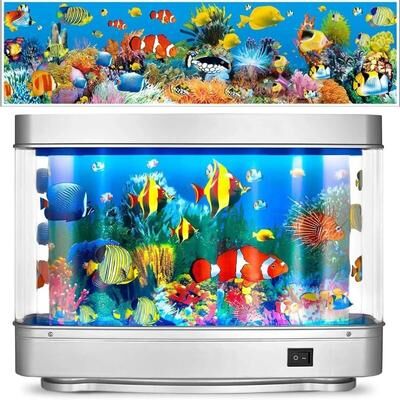
Uplift Essentials Virtual Motion Ocean Aquarium Lamp Virtual Motion Ocean Aquarium Lamp"Experience the tranquil beauty of the deep blue without the maintenance of a real tank with the Virtual Motion Ocean Aquarium Lamp. This creative decorative piece uses highdefinition ""moving picture"" technology to simulate a vibrant tropical reef,..."79,97 $*Shipping: 0,00 $Secure redirect to the provider
-
Is equivalence transformation allowed?
Yes, equivalence transformation is allowed in mathematics. It involves manipulating an equation or expression by applying operations that do not change the solution set of the equation. This can include adding or subtracting the same quantity to both sides of an equation, multiplying or dividing both sides by the same non-zero number, or applying other algebraic operations that preserve the equality of the original equation. Equivalence transformations are commonly used to simplify equations, solve for unknown variables, or prove mathematical statements. **
-
What are equivalence classes?
Equivalence classes are sets of elements that are considered equivalent based on a specific relation or criteria. In mathematics, equivalence classes are used to partition a set into subsets where each element in a subset is considered equivalent to every other element in that subset. Equivalence classes help to simplify complex structures and make it easier to analyze and understand relationships between elements. **
-
What are equivalence points?
Equivalence points are the points in a titration where the amount of titrant added is stoichiometrically equivalent to the amount of analyte present in the sample. At the equivalence point, the reaction between the titrant and analyte is complete, and the solution is in its most stable state. This is often indicated by a sharp change in pH or a color change in the solution. The equivalence point is used to determine the concentration of the analyte in the sample. **
-
Can you determine all equivalence classes with respect to this equivalence relation?
No, I cannot determine all equivalence classes with respect to the equivalence relation without knowing the specific relation in question. The equivalence classes depend on the specific definition of the relation and the elements involved. Each equivalence class represents a set of elements that are related to each other according to the given relation. **
* All prices are inclusive of VAT and, if applicable, plus shipping costs. The offer information is based on the details provided by the respective shop and is updated through automated processes. Real-time updates do not occur, so deviations can occur in individual cases. ** Note: Parts of this content were created by AI.